Why Is Non-Finger-Jointed Solid Wood Better for Long-Lasting Dining Tables?
When looking for dining tables, the main question is: what makes a table last long and look good? A top-notch dining table should feel solid today and stay that way over time. The unseen details often determine if a table will age beautifully or develop issues.

Most solid wood furniture starts with a wood panel. This panel is the top of a dining table, the side of a cabinet, or a drawer front. The way this panel is made impacts its durability, looks, and how well it holds up on busy tables.
This guide will look at two main types of construction. One uses long boards glued together for a non-finger-jointed solid wood top. The other uses finger-jointed segments to create longer boards, which then form panels for dining tables or other furniture.
Finger joints are strong with today's adhesives and help with uniformity. Yet, non-finger-jointed solid wood from longer boards often looks smoother, with fewer glue-line breaks. This difference is key for tables that look calm, cohesive, and high-end at first glance.
ChapterLiving focuses on clear, upfront build details. This way, you know what you're getting before it arrives. The aim is a modern dining table that lasts and looks great while doing it.
What “Non-Finger-Jointed” Means in a Solid Wood Dining Table
When you look at dining tables, "non-finger-jointed solid wood" might seem confusing. It simply means the top is made from long boards glued together. This method creates a smooth, even look.

How traditional solid wood panels are built from long boards glued edge-to-edge
In a non-finger-jointed table, makers use long boards that run the same way. These boards are glued together to form a single, wide panel. Some parts are cut out to keep the surface smooth, which can waste material.
What finger-jointed boards are: smaller wood segments joined end-to-end to form longer boards
Finger-jointed boards are made from short pieces glued together like teeth. These longer boards can then be glued again to make a tabletop. This method is popular in modern tables because it uses small parts well.
Finger joints can be very strong with adhesives, but long-board construction can reduce “busy” glue-line interruptions
Finger joints are very strong once glued, making them good for load-bearing. But, long boards in non-finger-jointed tables have fewer glue lines. This makes the surface smoother.
Why finger joints often change the look: visible patterning and grain inconsistencies across the tabletop
Finger joints can make a table look busy with lines and patterns. The grain direction may change, making it look patchwork. Non-finger-jointed tables, on the other hand, offer a smoother look.
Spotting a Non-Finger-Jointed Solid Wood Dinning Table and FAS-Grade Wood on a Modern Dining Table Listing
When you shop online, “solid wood” can mean different things. A rubberwood dining table might be real wood but use short pieces for a wide top. Look for details on how the top is made, not just the wood type.
Use the wording on the page first. A Solid Wood Dining Table called “non-finger-jointed” or “long-board” means it has fewer joins. Terms like “finger-jointed” or “butcher block” suggest a busier look.

Then zoom in on the photos. Finger-jointed panels show many lines and a fused pattern. This is used when trees are too narrow for large slabs.
- Construction callout: “non-finger-jointed” or “long-board” should appear in the specs, not only in marketing copy.
- Top details: look for tabletop thickness and support notes (apron, frame, hardware), as stability is more than wood type.
- Panel language: watch for “jointed panel” terms and standardized board sizing references like 1220 × 2440, which can hint at panel-style sourcing.
- Thickness ranges: listings that mention common build options such as 12, 18, 26, 30, 32, or 38 mm tend to be more transparent about materials and milling.
For those looking for FAS-grade wood, check if “FAS” is clearly mentioned. It should be paired with the species and origin, like American Tulipwood from North America. This detail helps find a high-quality dining table listing.
Long-Lasting Strength: Structural Integrity, Movement, and Real-World Durability
Strength in dining room tables isn't just about the top's hardness. It's also about how the wood moves with seasons, meals, and cleaning. A stable build keeps the surface comfortable for years.
Finger-jointed boards are known for their solid stability, reducing warping and twisting. But, real durability comes from the whole system, not just one joint. That's why detailed build specs are key for a quality table.
Why wood movement matters for dining room tables: minimizing warping, cupping, twisting, and cracking
Wood expands and contracts with humidity changes. If it can't move, stress builds up, causing warping or small cracks. Heavy use and constant pressure can speed up this process.
Glue strength and joint styles may look good in tests. But, a table lives in a home, not a lab. Layout, support, and base stability are what keep it in shape over time.
Premium Engineering: Managing Wood Movement with Advanced Hardware and Steel Legs
Look under the top for hardware that lets wood move while staying in place. On extendable tables, hidden joints reduce stress during open-and-close cycles. This makes the table feel steady.
Extra reinforcement at high-load points is also important. Hidden wood blocks can brace the frame and spread force. Stainless steel legs help resist wobble and support the top.
Leg specs in listings are easier to trust. For example, 28mm stainless steel legs show a sturdy support strategy. When shopping, these details help you understand how the table manages movement and stays stable.
- Hardware clarity: expansion parts should be listed, not implied.
- Underframe support: look for bracing that limits twist under uneven loads.
- Leg rigidity: stainless steel legs with specific thickness help predict steadiness.
While traditional solid wood tables like the Long Island Table must rely purely on premium non-finger-jointed big-board straight splicing to remain flat, modern versatile dining needs demand a different kind of engineering. For high-flexibility extendable structures (such as the Retrova and Novo) or sculptural material-contrast designs (such as the Era and Elda), advanced brands achieve longevity by integrating precision metal components, hidden hardware expansion joints, or E0-grade solid wood multilayer board cores to collaboratively master wood's natural movement.
Appearance and Craft Value: Why Big-Board Tops Look More Premium
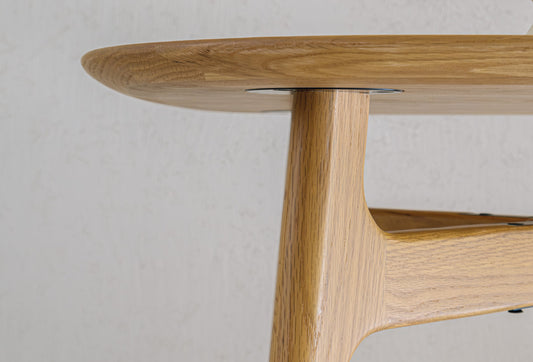
When you sit down to eat, the tabletop is the first thing you notice. A 100% non-finger-jointed solid red oak big-board surface looks calmer and more refined. This is because the grain flows smoothly without sudden breaks.
In a Solid Wood Dining Table, long boards joined edge-to-edge create cleaner grain flow across the full width. With fewer end-to-end joins, there are fewer “stop-start” moments where glue lines pull the eye away from the wood. This makes a modern dining table feel less busy in a bright, open room.
Cleaner grain flow and fewer visual interruptions for a high-quality dining table
Big-board construction often keeps color and grain direction more consistent from one end to the other. This matters under daylight, where mismatched pieces can stand out fast. If you want a high-quality dining table that looks intentional from every angle, fewer visual interruptions usually help.
- Long-board panels can show wider cathedral patterns and smoother transitions.
- Fewer joins can mean fewer spots where stain absorbs differently.
- The surface can feel more “made,” not “assembled.”
Big-board straight splicing vs. patchwork aesthetics in some finger-jointed panels
Finger-jointed boards can be strong, but the look is different. They combine many shorter pieces, leading to repeating blocks, shifts in grain, or visible lines. This is common on finger-jointed rubberwood with its interlocked segments.
Some people like that graphic pattern, making it perfect for a playful, design-forward modern dining table. For a quieter style, big-board straight splicing typically reads cleaner than a patchwork-style panel. ChapterLiving leans into that craft look, aiming for everyday practicality while keeping the top visually simple in a modern home.
Finish and Longevity: The Importance of Safe, Eco-Friendly Paints
Finish is part of the beauty story, and it affects how the table wears. Many finger-jointed pieces use oil and clear varnish to protect the surface and show off grain, while rubberwood is often paired with a lacquer finish for a sleek shine. Those approaches can look great, but buyers should also weigh day-to-day contact, cleanup, and indoor air concerns.
That’s where premium safe wood paint becomes a real quality signal, not just a marketing line. On a Solid Wood Dining Table used for meals, homework, and coffee, a well-chosen finish helps resist stains and makes routine wiping easier. Paired with a 100% non-finger-jointed solid red oak big-board top, the right coating supports the clean look people expect from a high-quality dining table.
Sustainability and Material Yield: The Real Tradeoffs Between Finger-Jointed and Non-Finger-Jointed Wood
Sustainability in dining tables isn't just about "less waste." It also depends on how the wood is sourced, finished, and used. A Solid Wood Dining Table that lasts can reduce the need for new ones.
Fact: finger joint boards can increase wood yield by up to 25% by using shorter clear pieces instead of cutting around
Finger joint panels make better use of wood by turning short pieces into boards. This can increase wood yield by up to 25%. It's why these panels are common in affordable and mid-range dining tables.
On the other hand, higher-clear grades like FAS-grade wood offer longer, cleaner boards. These can support wider planks with fewer joins.
Why finger-jointed boards are widely used in furniture and construction: cost-effectiveness, stability, and efficient
Finger joints are popular because they're efficient, cost-effective, and stable. They help control straightness and reduce waste. This makes them a good choice for many dining tables.
They're also seen as eco-friendly because they reuse wood shorts. But, the real impact depends on the adhesive, factory controls, and sealant used.
How to evaluate sustainability beyond yield: species choice, sourcing, finishing chemistry, and product lifespan
Choosing the right species is key. Rubberwood is often chosen for its sustainability. It comes from trees harvested after 25–30 years, when latex output drops.
But rubberwood can decay easily, so it needs chemical treatments. When comparing tables, look at the finishing chemistry too. This includes the use of safe wood paint and low-odor coatings.
For those who value longevity, non-finger-jointed solid wood is a good choice. It can last longer with proper joinery and finishes. This can be more sustainable, even if the yield is lower.
- Yield: Finger-jointed panels efficiently lower initial manufacturing waste by utilizing shorter clear segments.
- Inputs: Modern eco-footprints depend heavily on adhesive safety, treatment chemistry, and the application of premium safe wood paint.
- Lifespan: Selecting a durable, non-finger-jointed or masterfully engineered modern dining table creates the ultimate sustainable impact by delaying replacement for decades.
How to Identify Premium Materials When You Buy Furniture Online
When shopping for furniture online, treat the listing like a quick inspection. A modern dining table can look similar in photos. So, the material clues are key. Start by checking if the dining table top is made from long boards or short segments.
- Construction callouts: Look for clear, close-up shots of the top. A Solid Wood Dining Table made from long boards often shows calm, consistent grain and straight glue lines. Finger-jointed panels may show a zig-zag pattern at board ends, a patchwork look, or frequent interruptions across the surface.
- Stability indicators: Scan the specs for steps that limit cupping and twisting, like under-top rails, cross braces, or hardware expansion joints. Some listings highlight finger-joint stability, but premium builds explain how movement is managed over time.
- Leg and frame specs: For a clean, current profile, stainless steel legs or steel supports can help a dining table feel planted on the floor. Look for thickness, weld quality, and how the legs attach to the frame, not just the style photo.
- Finish disclosures: The best listings say what’s on the surface—oil, clear varnish, or lacquer—and whether it’s intended for dining use. A dining table finish should be easy to wipe and built for spills, heat, and daily contact.
Marketing terms also need a second look. “Real wood” can mean rubberwood, and rubberwood is real wood, not MDF. But wide rubberwood tops often rely on joining methods because trees may not yield large, single boards, which can affect how a dinning table looks up close.
If the listing names the species, compare durability expectations. Rubberwood holds up well to normal wear, while oak is denser and often linked with longer service life in a Solid Wood Dining Table. Matching the wood, base build, and finish details is the simplest way to judge a modern dining table from a screen.
ChapterLiving Modern Dining Tables Built for Longevity: Transparent Specifications and Expert Product Picks
ChapterLiving focuses on fine craftsmanship and true value in its modern dining tables. Each table's spec sheet clearly shows what's solid wood and what's engineered for strength. This helps you shop with confidence, knowing how the table will age.
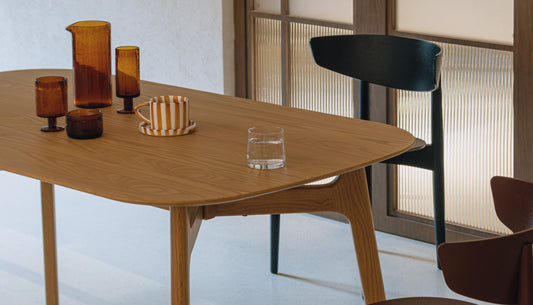
The Long Island Table is perfect for those who want a clean, premium surface. It uses 100% non-finger-jointed solid red oak big-board and straight splicing. This creates a smooth grain flow and fewer visual breaks, giving it a lasting look in any U.S. home.
Looking for a table that's flexible but stable? The Retrova Extendable Dining Table is your choice. It's made with FAS-grade American Tulipwood and has 28mm stainless steel mirror-finish legs. It also has hidden hardware expansion joints for smooth extension and steady support.
The Novo Extendable Dining Table offers a similar blend of beauty and engineering. It pairs North American tulipwood with an e0 grade solid wood multilayer board core. This helps reduce stress from seasonal changes.
For a round, sculptural option, the Era Table is built with solid American Tulipwood. It's designed to resist deformation over time. The key takeaway is simple: choose big-board construction for the cleanest grain. Opt for strong extension hardware and support legs for everyday versatility.
For lovers of mid-century grandeur and striking contrast, the Elda Extendable Table highlights a stunning material fusion, combining dense solid boxwood craftsmanship with heavy-duty stainless steel legs to eliminate any risk of structural twisting.
Continue Your Journey to a Well-Made Home
Found this guide helpful? Building a space that balances lasting craftsmanship with daily practicality doesn't stop at understanding raw lumber. To help you decode the rest of your home and shop with complete confidence, explore our expert blueprints next:
-
[Drop-Leaf vs. Stow-Away Leaf: Which Extending Dining Table Mechanism Fits Your Home?]
Delve deeper into the science of flexible dining. If you are leaning toward an adaptable space, this guide breaks down the structural differences, weight-bearing capacities, and spatial efficiency of the market's leading extension mechanics to find your perfect fit. -
[How Can You Spot a Well-Made Modern Dining Table Online Without Touching It?]
Master the art of the digital showroom. This essential companion guide equips you with a rigorous product-page checklist, teaching you how to analyze high-resolution photos, decode frame engineering, and spot hidden quality signals right from your screen.
FAQ
What construction details signal premium engineering in extendable dining tables?
Look for features like hardware expansion joints and hidden corner triangular wood blocks. Also, check the leg and frame specs for stability.
Do stainless steel legs really improve stability on a modern dining table?
Yes, they do. Stainless steel legs make modern tables more stable. Look for specific leg dimensions in the listing.
What finishes should shoppers look for on a dining tabletop used every day?
Choose finishes that protect the wood and highlight its grain. Oil and varnish are common. For a sleek look, lacquer is often used. Look for safe, premium finishes.
Is finger-jointed wood more sustainable than non-finger-jointed long boards?
It depends. Finger joints can use up to 25% more wood. But, sustainability also depends on sourcing and lifespan. A longer-lasting table is better.
Why is rubberwood often marketed as sustainable, and what are its tradeoffs?
Rubberwood comes from trees that are harvested after 25–30 years. It's seen as sustainable. But, it can decay and may need chemical treatments, which some find concerning.
What material details should I prioritize to identify premium build quality online?
Look for non-finger-jointed construction, thickness, and under-top supports. Check the hardware and core details. For a premium look, focus on the wood species and grade.
What makes ChapterLiving’s approach different when shopping for dining tables online?
ChapterLiving is transparent about materials. They clearly state if it's pure timber or engineered. This helps buyers choose a
Solid Wood Dining Table that lasts.
Which ChapterLiving tables highlight non-finger-jointed big-board craftsmanship?
The Long Island Table features 100% non-finger-jointed solid red oak big-board construction. It's a premium option for those who want a clean look.
Which ChapterLiving extendable tables emphasize engineered stability and hardware details?
The Retrova Extendable Dining Table uses FAS-grade American Tulipwood and hidden hardware expansion joints. Check the leg specs for stability. The Elda extendable table should be evaluated the same way.
What’s the value of a tulipwood table with an engineered core?
It combines refined wood with stability. The Novo Extendable Dining Table uses high-standard North American Tulipwood with a certified E0 grade solid wood multilayer board core. It looks premium and manages movement well.
Which ChapterLiving table is designed as a round option with deformation resistance in mind?
The
Era Table is a sculptural round table made from solid American Tulipwood. It's designed to resist deformation, making it practical for daily use.
Previous
Drop-Leaf vs. Stow-Away Leaf: Which extending dining table mechanism fits your home?
Next
Kid-Safe and Wobble-Free: How to Choose the Best Extendable Dining Table for Busy Families?