Kid-Safe and Wobble-Free: How to Choose the Best Extendable Dining Table for Busy Families?
In the chaos of busy families, the dining table is where life unfolds. Juice spills, homework spreads, LEGO sets grow, and birthdays sneak up fast. That's why an extendable dining table must be tough, not just look good.

This guide is for parents seeking a sturdy extendable dining table. It should stay steady when kids lean, climb, and scoot chairs. A kid-safe table with an extender should feel secure daily, then expand easily when relatives arrive.
“Family-friendly” should be straightforward. You shouldn't have to worry about the surface or panic over normal wear. The best options are durable, versatile, and made to last through crafts, meals, and late-night work.
We'll look at key features like safety, stability, and usability. You'll see how ChapterLiving designs furniture that supports changing homes. It stays solid through milestones and everyday life.
Why an extendable dining table matters in the “beautiful chaos” of busy families
In the chaos of busy families, the dining area is more than a place to eat. It's where days get organized, crumbs get wiped, and plans get made. An extendable dining table fits this reality because it adapts without taking over the room.

The table as long-term family infrastructure (meals, homework, crafts, milestones)
Think of the table as long-term family infrastructure. It handles breakfast, homework, crafts, and the random science project that shows up at 8 p.m. Style is important, but durability matters more.
The best pieces balance natural beauty with strength. When the finish cleans fast and the base stays steady, the whole home feels easier to run. This is the goal: fewer workarounds, more usable space.
- Must-haves: rounded edges, a sturdy base, easy-clean finish, enough legroom, kid-compatible seating, and room for daily tasks plus serving dishes.
- Nice-to-haves: an extension system, built-in storage, a matching bench/set, and a look that can ride through more than one decor phase.
Shared meals are common: 25–50% of families eat together several days a week (BMC Public Health, 2025)
Even with sports, late meetings, and split schedules, shared meals are common. BMC Public Health (2025) reports that about 25–50% of families eat together several days a week. This makes the table a repeat-use hub, not just for special occasions.
When the setup works, dinners feel less crowded and less rushed. Better flow helps when kids climb in and out, and when hot dishes need a safe landing spot.
What “smart functionality” looks like in a daily household rhythm
Smart functionality is what lets one space do many jobs in a daily household rhythm. A dining table with extender can stay compact on weekdays, then open up for a puzzle, a baking day, or extra place settings. You get the space when you need it, without owning a second table.
Look for an extendable dining table that expands smoothly and resets fast. A reliable dining table with extender supports quick transitions, so the room can shift from dinner to projects and back again. This flexibility is what keeps busy families moving.
The Weight of Everyday Living: Finding a Truly Wobble-Free Structural Design for Active Kids
In a busy home, a dining table takes daily hits. It faces backpacks, crayons, elbows, and the occasional kid sprint. The goal is simple—choose a build that stays steady, feels safe to touch, and holds up when life gets loud.

Non-negotiable safety features: wide and safe rounded edges, stable base, and tip-resistant proportions
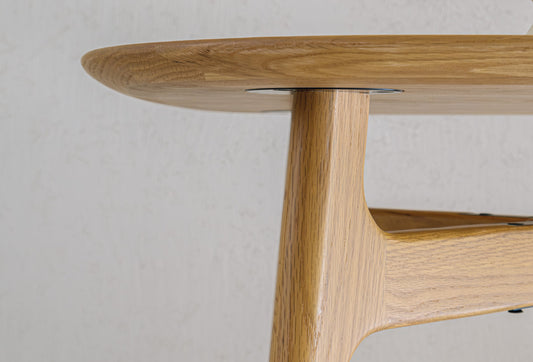
Start with the parts kids meet first. Wide and safe rounded edges help cut down bumps when little ones whip around corners. A chamfered profile can also feel smoother on wrists during homework and snacks.
Next, look at the base like you’d look at a ladder: does it feel planted? A table with tip-resistant proportions is less likely to shift when kids lean in to color or try to climb. If the top looks heavy but the base looks narrow, keep shopping.
Wobble-free structural design basics: rock solid foundation, edge stability, and bracing that doesn’t block knees
A wobble free structural design should pass the “one-hand press” test. Push down near the corner and along the long side. You want edge stability, not a springy bounce that grows into squeaks over time.
Under the top, aim for a rock solid foundation with smart bracing. Strong support bars can help, but they shouldn’t turn into a knee-banging hazard. A clean apron line and well-placed cross supports often feel better for tall guests and booster seats alike.
Build quality matters here. Real hardwood or high-grade engineered wood tends to resist flex, thanks to mortise-and-tenon joinery or sturdy metal brackets. Cheap cam-lock joints can loosen with repeated moves and seasonal changes.
Do a quick tactile check: run your hand along the underside. Rough edges, splinters, or sloppy staples can signal rushed finishing and weaker long-term durability.
Kid-safe extension details: pinch free hardware, industrial grade heavy duty slide rails, and gap-aware leaf design
An extender should feel like part of the table, not an add-on. Look for pinch free hardware that keeps fingers safer during open-and-close moments. A gap-aware leaf design also helps reduce tempting spaces where small hands like to explore.
For families who extend often, the slide system matters as much as the top. Industrial grade heavy duty slide rails tend to glide straighter under load, and multi layer anti rust tracks help the motion stay smooth after years of spills and wipe-downs.
- Open it slowly and listen: grinding or clicking can hint at poor alignment.
- Check that the leaf locks flat, with minimal lip or rocking at the seam.
- Make sure the handles and release points are easy for adults, not “toy-like” for kids.
How to check wobble-free stability in real life (the lean in test)
Before you fall for looks, give the table a quick feel test. In a busy home, stability is a daily safety feature, not a bonus. The lean in test is simple, repeatable, and easy to do in a showroom or at home.
Start with gentle pressure from different angles, like a kid would. Place one hand near a corner and press down, then shift to the opposite corner. You’re watching for wobble detection, not trying to “break” anything.
- Push and pull at the short ends, then the long sides, and notice any side-to-side sway.
- Corner-press near each leg, then repeat with the leaf extended if it has one.
- Knock the top lightly with your knuckles and listen for hollow rattles or loose joints.
- Drag it a few inches on the floor (with permission) to feel for twisting or flex.
Next, look underneath the top where real strength lives. Solid aprons help stop racking, while crossbeams and support bars add stiffness across the span. Good bracing should boost stability without banging knees or blocking chairs.
Run your fingers along the places hands and sleeves catch. Quality builds tend to use snag-free hardware, with smooth edges and tidy fasteners that don’t scrape skin or grab clothing. This is where fine craftsmanship shows up in small details.
Then check the leg and base cues you can spot fast. 100mm square profile legs can signal a more planted stance, even with thicker frames. Also look for balanced weight distribution, so the table doesn’t feel top-heavy when kids lean on one side.
Finish with a few quick durability checks you can repeat at home. Set a cold glass on the surface for a few minutes to see how it handles condensation rings. Wipe up crumbs, coffee, and fingerprints to judge cleanup, then do a light key drag in an out-of-sight area to gauge scratch resistance.
Choosing the best shape: round extendable dining table vs. rectangular for kid traffic and seating
Shape greatly affects how a room feels. Meals, homework, and play all happen on the same surface. A good extending dining table keeps paths clear, reduces bumps, and makes seats easier to grab during busy times.
Going with a round extendable dining table: Why soft edges win for toddler traffic
A round extendable dining table is perfect for toddler-friendly homes. It has no sharp corners, making it safer for kids to move around. Adults can also get close without worrying about bumping into corners.
Choose a pedestal base if you can. It reduces leg clutter, lowers trip risks, and makes space for high chairs or boosters. A round table also helps everyone face each other, making conversations easier.
Room shape is also important. Round tables work well in square rooms or small open-plan areas. If your space is narrower, an oval table keeps the soft-edge feel while allowing more reach along the sides.
Going with a rectangular extending dining table: Maximizing seating for holiday hosting
A rectangular extending dining table is better for long rooms and wide-open layouts. It's easy to line up kids on one side, add a bench for flexibility, and keep chairs on the other for easy access.
It also supports multitasking. The center can hold platters, art supplies, or a laptop without crowding plates. Serving from both sides is also easier.
- Everyday: keep it compact for clear walkways and calmer kid traffic.
- Special days: add leaves for holiday hosting without borrowing a second table.
Whether you choose a round or rectangular table, the key benefit is the same. An extending dining table adapts quickly, making your room flexible for any occasion.
Materials, finishes, and indoor air quality: building a kid safe dining table that lasts
A kid safe dining table must withstand sticky hands, hot plates, and daily bumps. It should feel good, be strong, and keep the air clean. This way, your home stays cozy when everyone's around.
Best-performing tops for family life
Solid wood is warm and durable, perfect for years of use. It can dent, so quick clean-ups are key.
A veneer over a stable core is a good choice. It resists warping and is lighter. But, watch out for thin veneers and weak edges.
Engineered stone is great for messy meals and oven dishes. It's stain and heat resistant but may be heavy and expensive.
Tempered glass is easy to clean but shows dirt and fingerprints. It's a good choice if you're okay with frequent cleaning.
Solid wood quality cues
“Solid wood” doesn't always mean high quality. Marina Kotchoubey from Ian Ingersoll in West Cornwall, Connecticut, says to check the lumber grade and construction.
Premium FAS-grade timber features fewer, wider boards, ensuring the wood looks uniform and wears evenly over decades. High-end solid hardwood selection is popular for its incredibly smooth, dense surface that resists everyday family impacts.
Look closely at the wood in good light. You want clean grain matching and balanced color. A durable top coat is also important, hiding fingerprints and scratches.
Health-forward finishing
Finishes matter for indoor air quality. The American Lung Association says indoor air can be worse than outside. This can cause headaches and asthma in kids, so choose low-VOC options.
Find out what's used on the surface and edges. Kids touch these areas a lot. Opt for family safe wood paint or eco friendly water based paint for a sealed, easy-to-clean finish.
Fit, spacing, and everyday usability for a dining table with extender
Before choosing a dining table, think about how you live. Kids move around, backpacks take up space, and an extender is only useful if it's easy to use every day.
Right-size guidelines
Use a tape to measure the room. Aim for about 24 inches of space per person along the table edge. This elbow room is more important than finding the perfect table length.
A table size of 47–55 inches often fits four people. For six, go for 63–71 inches. Also, make sure there's 36 inches of clearance from the table to walls or furniture. This lets chairs slide out and keeps traffic flowing.
Legroom and seating reality checks
Product pages might be too optimistic. Do a quick sit test to check legroom. Use an 18-inch chair height, add placemats, and see if the table design is comfortable.
Consider whether benches or chairs are better for your family. Benches save space and can fit more people, while chairs offer personal space and better back support. Many families choose a mix of both for a practical layout.
Remember high chairs and boosters. Make sure boosters attach securely and high chairs fit without hitting the table. Also, ensure the layout is safe for kids' toes.
Easy-care routines for extending dining table living
For daily mess, the finish and care routine are key. Matte/satin finishes hide smudges and scratches better than high gloss. Wipe-friendly surfaces make cleaning up spills easier.
Keep quick reset caddies with washable placemats, microfiber cloths, and heat-safe trivets nearby. A low centerpiece that's easy to move makes switching from crafts to dinner quick.
ChapterLiving extendable table furniture picks for the next chapter of home
ChapterLiving creates extendable table furniture for changing homes. These tables are stable and safe for kids. They also come with non-toxic materials and easy extension.
At ChapterLiving, we believe that home is an ever-evolving story written in spaces that unfold with each family milestone, which inspires us to create versatile furniture that harmonizes smart functionality with natural beauty. Understanding the daily rhythm of busy households, we design each extendable dining table with a focus on rock-solid stability, child-safe rounded corners, and premium non-toxic materials.
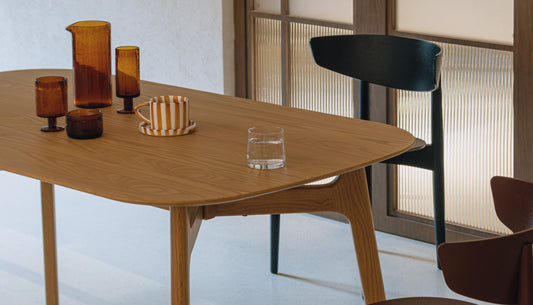
For active homes, the Novo Extendable Dining Table pairs a scratch-resistant black sintered stone top with massive 100mm square profile legs for a rock-solid foundation. If you extend your table frequently, the Retrova Extendable Dining Table offers smooth, pinch-free hardware and child-safe wide rounded corners, complete with a zero-clean self-storing center leaf. For compact rooms, the Elda Extendable Drop-Leaf Table provides a 100% gap-free top for routine family meals, allowing the side wings to drop down effortlessly when you need to reclaim valuable space.
Further Reading for Smart Homes
Building a dining space that survives the "beautiful chaos" of family life doesn't stop at checking for wobbles. To help you make the most informed decision for your next home investment, we’ve handpicked two essential guides:
-
[Drop-Leaf vs. Stow-Away Leaf: Which Extending Dining Table Mechanism Fits Your Home?] Now that you know how to test for safety and stability, dive deeper into the mechanics. Whether you're leaning toward the space-saving agility of a drop-leaf design (like our Elda) or the seamless, hidden integration of a stow-away leaf system (like our Retrova), this structural breakdown will help you choose the exact mechanism that aligns with your daily household traffic and room layout.
-
[Why Is Non-Finger-Jointed Solid Wood Better for Long-Lasting Dining Tables?] If you've decided on the timeless warmth of natural timber, make sure you're getting true heirloom quality. Low-cost tables often hide hundreds of ugly zigzag "finger joints" under a thick stain, creating weak points prone to cracking under heavy family use. Learn how to spot genuine, continuous-grain solid wood craftsmanship that ensures your family centerpiece truly builds to last through generations.
FAQ
What makes an extendable dining table “family-friendly” in real life?
A family-friendly extendable dining table fits into daily life, not just photos. It should handle spills, homework, and birthday cakes easily. Look for a wobble free structural design, wide edges, and an easy-clean finish.
Why does an extendable table matter for busy families?
What are the non-negotiable kid safety features to look for?
How do I know if a table is truly wobble-free before I buy?
What should I inspect underneath the tabletop for stability and durability?
What leg and base details signal a rock-solid foundation?
Why is extension safety a core feature, not a bonus?
Is a round extendable dining table better for kids than a rectangular one?
When does a rectangular extending dining table make more sense?
What table materials perform best for daily messes and wear?
Does “solid wood” automatically mean higher quality?
What finishes are best for kids, messes, and indoor air quality?
How can I predict how a tabletop finish will handle real life?
How much space do I need around an extending dining table?
How do I verify the real seating capacity and legroom?
What should I check for high chairs, boosters, and toe-safe layouts?
Are benches or chairs better for families?
What’s a simple routine to reset the table from homework to dinner?
Which ChapterLiving extendable table furniture options fit different family needs?
What are the “must-haves” vs. “nice-to-haves” when choosing an extendable dining table?
What wood should I look for if I want long-term durability and a cleaner finish?
Previous
Why Is Non-Finger-Jointed Solid Wood Better for Long-Lasting Dining Tables?
Next
Why £299? The best-value sit-stand desk- in the UK